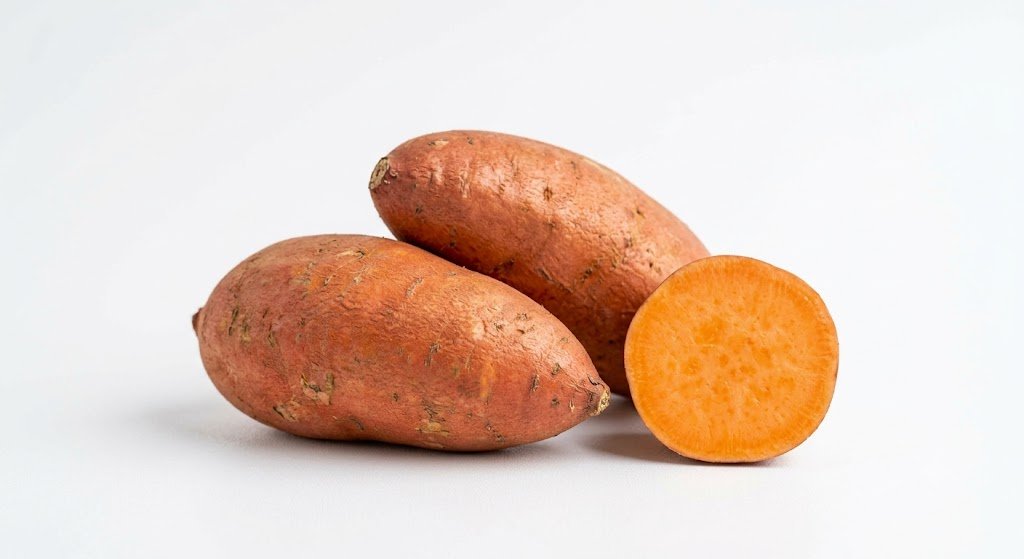

Sweet potato is a nutrient-dense root vegetable belonging to the morning glory family (Convolvulaceae), grown for its large, starchy, sweet-tasting tuberous roots. Known for its rich flavor and smooth, satisfying texture, this vegetable has become a staple in kitchens worldwide. Native to the tropical regions of the Americas, it was domesticated thousands of years ago and spread across the globe through early exploration and trade. Today it’s grown across Asia, Africa, and the Americas, and is prized in baked dishes, stews, fries, and traditional holiday sides.
Packed with vitamins, minerals, dietary fiber, and beneficial plant compounds, this root vegetable is valued for both its nutritional density and its culinary versatility. This guide explores its history, nutritional profile, health benefits, traditional uses, cultivation methods, and practical ways to include it in your diet.
The History of Sweet Potato & Its Cultural Importance
This vegetable has a long agricultural history rooted in Central and South America and later spread across the globe through migration and trade.
Sweet Potato Through the Ages
- Ancient Roots: Domesticated over 5,000 years ago by indigenous communities in Peru and Central America, who valued its hardiness and sustained energy supply.
- Polynesian Voyaging: Compelling evidence suggests that Polynesian voyagers traveled to South America and brought the root back to the Pacific Islands long before European contact.
- Global Introduction: Spread rapidly to Europe, Asia, and Africa following the Spanish and Portuguese expeditions of the late 15th century.
- Modern Popularity: Now one of the most critical food security crops globally, particularly in parts of Asia and Sub-Saharan Africa, valued for its high caloric yield and deep nutritional profile.
Botanical Description of Sweet Potato
Ipomoea batatas belongs to the Convolvulaceae family and, despite its common name, is entirely unrelated to the ordinary white potato (Solanaceae) or true yams (Dioscoreaceae).
Plant Characteristics
- Growth: A herbaceous perennial vine that trails along the ground, forming dense green carpets.
- Leaves: Heart-shaped or palmately lobed leaves that can vary from green to purple depending on the cultivar.
- Flowers: Funnel-shaped, medium-sized flowers that closely resemble typical morning glory blossoms, ranging in color from white to pale purple.
- Tuberous Root: The underground storage organ, featuring smooth skin that ranges from red, purple, brown, to white, and flesh that can be brilliant orange, white, yellow, or deep purple.
Growing Conditions
This vegetable is a warm-season crop that thrives in bright sunlight and requires a long, frost-free growing period to produce large tubers.
- Ideal Temperature: 24–30°C for optimal vine growth and tuber development.
- Soil Type: Loose, well-drained sandy loam soil with a slightly acidic to neutral pH (5.5 to 6.5) to ensure unhindered root expansion.
- Propagation: Grown using “slips,” which are sprouts grown directly from mature tuberous roots.
- Harvesting Season: Ready to harvest 90–120 days after planting out the slips, typically before the autumn frost sets in, when the vines begin to turn yellow.
Nutritional Profile of Sweet Potato
This vegetable is inherently rich in complex carbohydrates and beta-carotene, making it a favorite among energy-seeking athletes and nutrition-conscious eaters.
Nutrients (Per 100g Baked Serving with Skin)
| Nutrient | Amount | Health Benefits |
| Energy | 90 kcal | Sustainable, complex-carbohydrate energy source |
| Protein | 2.0g | Supports cellular repair and muscle retention |
| Dietary Fiber | 3.3g | Promotes stable digestion and gradual glucose release |
| Vitamin A | 961µg | Exceptional source for vision support and skin cell health |
| Vitamin C | 19.6mg | Supports immune cell signaling and collagen structure |
| Vitamin B6 | 0.29mg | Supports metabolism and cognitive development |
| Potassium | 475mg | Regulates optimal fluid balance and cardiac rhythm |
| Manganese | 0.5mg | Assists in bone formation and carbohydrate metabolism |
Note: Nutrient values vary slightly depending on growing conditions, freshness, and cooking method. (Source: USDA FoodData Central)
Sweet Potato Benefits for Your Everyday Health
1. Provides Superior Vision Protection
The orange-fleshed varieties are an absolute powerhouse of beta-carotene, an antioxidant that the human body efficiently converts into Vitamin A. This crucial vitamin supports the optimal function of the retinas and prevents night blindness.
2. Supports Digestive Health
Its rich combination of soluble and insoluble dietary fiber plays an active role in maintaining gut motility and feeding beneficial gut microbes, which aids in overall digestive wellness.
3. Supports Healthy Blood Sugar Management
Despite their distinctively sweet taste, sweet potatoes possess a relatively low to medium glycemic index when boiled, which helps avoid rapid insulin spikes.
4. Provides Antioxidant Protection
Contains deep anthocyanin pigments (especially in purple varieties) and beta-carotene that actively scavenge free radicals, helping protect tissues from cellular stress.
5. Supports Immune Function
The robust levels of both Vitamin A and Vitamin C work closely together to reinforce the skin barrier and stimulate the activity of protective white blood cells.
6. Supports Cardiovascular Wellness
Its high natural potassium content works in tandem with dietary fiber to assist in regulating blood pressure levels and lowering arterial strain.
7. Enhances Meals Naturally
Adds a rich, comforting texture and innate sweetness to savory stews, baking recipes, and breakfast hashes without the need for processed sugars.
Traditional & Modern Culinary Uses for Sweet Potato
1. Baked or Roasted
Baking the whole root in its skin slowly caramelizes its natural sugars, creating a tender, flavorful interior that requires minimal extra seasoning.
2. Soups and Hearty Stews
Due to its high starch density, cubed sweet potato acts as a brilliant thickening agent when simmered gently into curries, broths, and blended seasonal soups.
3. Baked Mash and Pies
Boiling or steaming the flesh allows it to be mashed smoothly, serving as a texturally rich base for nutritious side dishes or wholesome desserts.
4. Health-Conscious Fries
Slicing the root into thin wedges, coating them lightly with cold-pressed oil, and air-frying or baking them creates a fiber-rich alternative to standard potato chips.
How to Include Sweet Potato in Your Diet
- Baked Whole Root – Bake thoroughly and slice open, topping with a dash of cinnamon or a drizzle of olive oil.
- Savory Stir-Fries – Dice into small cubes and toss with hearty greens, ginger, and garlic.
- Nutritious Salads – Toss cold roasted cubes into fresh greens alongside nuts and seeds for added texture.
- Breakfast Bowls – Layer mashed sweet potato under an egg or mix into morning oatmeal for a complex carbohydrate boost.
- Caramelized Wedges – Roast sliced pieces at high heat with paprika, garlic powder, linand sea salt.
Side Effects & Precautions
While generally safe and beneficial for most people when consumed in normal dietary amounts, this vegetable may cause:
- A completely harmless, temporary orange tint to the skin (carotenodermia) if consumed in massive quantities over extended periods.
- Mild digestive changes in individuals whose digestive tracts are unaccustomed to sudden surges in high-volume dietary fiber.
- Kidney stone considerations for highly susceptible individuals, as sweet potatoes contain notable amounts of dietary oxalates.
Individuals tracking strict macro limits should account for its carbohydrate content, balancing it with adequate proteins and healthy fats to maintain steady daily energy levels. (Source: Wikipedia: Sweet Potato)
Conclusion
Ipomoea batatas is a nutrient-rich root vegetable celebrated for its rich sweetness, comforting texture, and versatile culinary applications. From simple baked preparations to complex curries, hearty stews, and modern plant-based snacks, sweet potato has established itself as one of the most reliable and valued foods globally. Whether enjoyed sweet or savory, it brings exceptional life-giving value to a balanced dietary routine.
Start incorporating sweet potato into your weekly meal planning and enjoy its robust flavor profile and healing properties as part of a healthy, natural lifestyle. To continue reading more such blogs, visit Naturefix.in