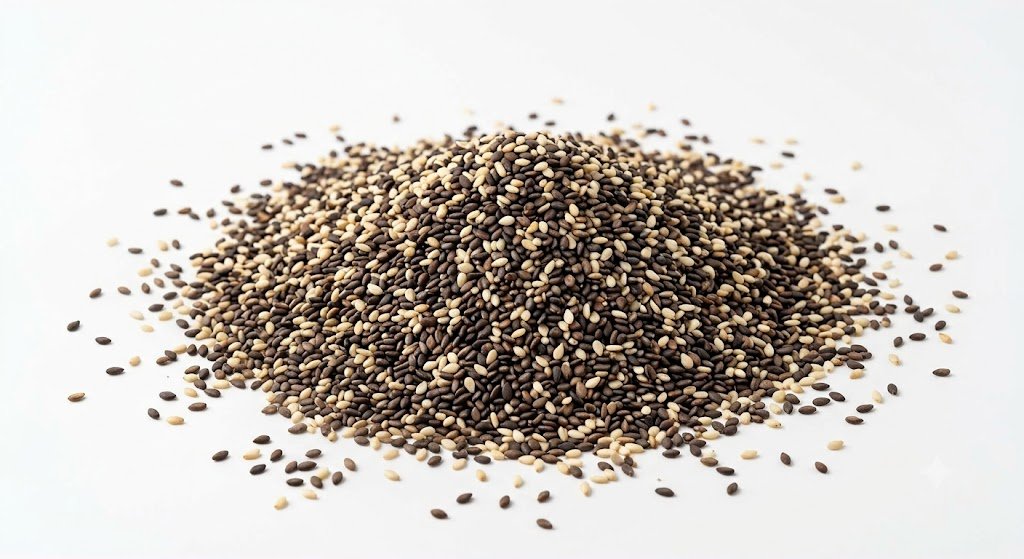
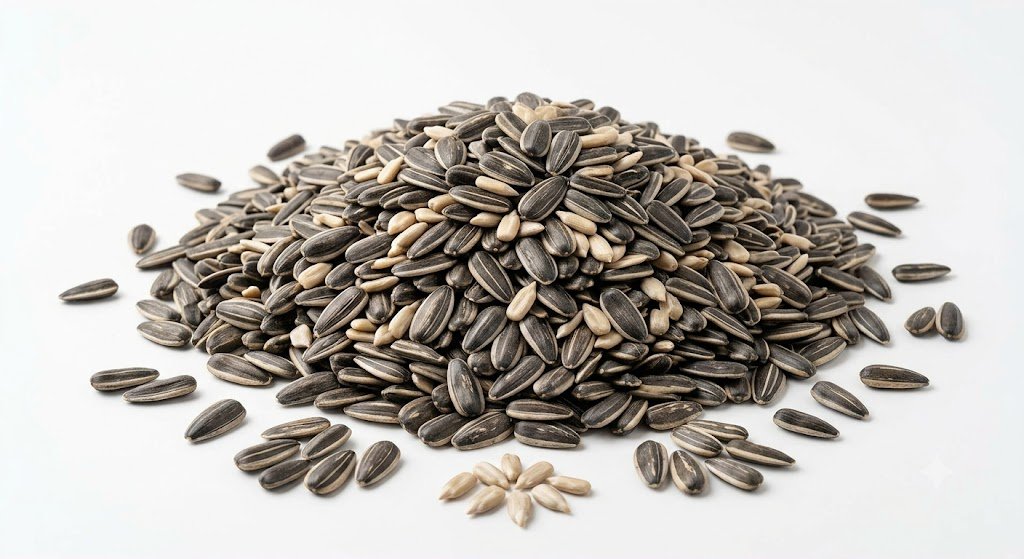

Sunflower seeds are a highly nutrient-dense functional food harvested from the radiant, composite flower heads of the sunflower plant (Helianthus annuus). Embedded systematically within the central disk of these towering plants, each seed grows encased in a protective, striped black-and-white hard teardrop shell. This historic food is widely celebrated across the globe for holding an exceptional natural concentration of fat-soluble antioxidant vitamins and thyroid-supporting trace elements. Additionally, it features a beautifully crisp, tender texture alongside a distinctively mild, toasty, buttery, and nutty flavor footprint. For this reason, it has become a foundational culinary and functional food staple in many international markets.
Originally, the parent plant species was native to the ancient, expansive river valleys and plains of North America. However, it was domesticated thousands of years ago by indigenous farming tribes during the dawn of early human agricultural tracking lines. Later on, it spread rapidly across Europe, Russia, and the Americas through Spanish exploration paths and intensive Russian selective breeding frameworks. Today, it is produced extensively across Ukraine, Russia, Argentina, and China. Consequently, it is prized as a clean portable whole food snack, a baseline for allergen-friendly seed butters, a structural texturizer for whole-grain baking, and a modern cellular wellness staple.
Because it is packed with essential dietary fiber, plant protein matrices, and a massive density of active alpha-tocopherol and protective plant sterols, this seed is highly valued. It offers incredible nutritional density alongside remarkable culinary versatility. Therefore, this comprehensive guide explores its history, nutritional profile, health advantages, traditional uses, cultivation frameworks, and practical ways to include it in your daily diet safely.
The Historic Journey of Sunflower Seeds & Their Cultural Importance
This premium botanical seed possesses a monumental agricultural history rooted deeply in early indigenous survival and European industrial tracking pathways. Over time, it spread across the globe through continuous migration and trade.
The Ancient History of Helianthus Seed Matrixes
- The First Domesticated Crops: Early human societies across North America cultivated the giant annual stalks as early as 3000 BCE. Growth parameters prioritized these fields because the harvested kernels provided long-lasting, shelf-stable energy that sustained tribes through long winters.
- The Russian Orthodox Fasting Boom: Historical church authorities introduced the crop to Eastern Europe, where it became an absolute staple in the 18th century. Because the church did not explicitly ban the unrefined seed fats during strict Lenten fasting periods, it rapidly evolved into the region’s primary culinary fat source.
- The Native American Travel Cakes: Indigenous tribal travelers heavily integrated the properties of the fresh seeds into early meal preps. As a result, they ground the raw kernels into a rich paste and formed them into portable travel balls to sustain long tracking journeys.
- Modern Cellular Defense Validation: Food scientists isolated its unique fat-soluble antioxidant matrix, particularly its high alpha-tocopherol and selenium synergy, in the late 20th century. Therefore, it achieved massive contemporary popularity globally as a premier heart-healthy whole food.
Botanical Description of the Sunflower Plant
Helianthus annuus belongs to the daisy family (Asteraceae). For instance, it grows naturally as a towering, fast-growing herbaceous annual completely distinct from standard commercial grain grass fields or woody vines.
Structural Characteristics of Sunflower Nut Kernels
- Growth: It grows naturally as a tall, erect annual herbaceous plant. Usually, it reaches 1.5 to 3.5 meters in height within a single season and develops a thick, coarse green stem covered in rough protective hairs.
- Leaves: The plant produces large, alternate, heart-shaped green leaves measuring 10 to 30 cm in length. In addition, these rough, roughly textured leaves feature finely serrated structural margins and a deeply veined surface area.
- Flowers: It bears massive, striking terminal flower heads measuring up to 30 cm in diameter. Typically, the head consists of a dense central disk composed of thousands of tiny, fertile tubular blossoms surrounded by a vibrant crown of golden ray florets.
- The Achene Fruit: It forms thousands of individual, hard-walled achenes or seed casings arrayed systematically in overlapping spiral patterns. Furthermore, removing this outer hull layer reveals the smooth, cream-colored, oil-dense kernel that holds the active nutritional matrix.
Ideal Growing Conditions for Maximum Sunflower Seeds Yield
This plant is a sun-loving, highly adaptable and drought-resistant seasonal crop. Therefore, it requires open field solar exposure and loose, deep soil matrices to complete its seed-filling phase successfully.
- Ideal Temperature: It prefers warm growing climates between 20–30°C for optimal stalk extension and flower head development. However, it displays remarkable resilience against moderate late-summer dry periods once its root systems establish deep footholds.
- Soil Type: It thrives best in deeply drained, loose, fertile alluvial loams or sandy loams with a neutral pH profile. On the other hand, it absolutely cannot tolerate highly compacted, heavy clay layers that restrict taproot growth.
- Propagation: It is regularly grown from seeds sown directly into open field rows during late spring. Specifically, its unique heliotropic nature allows young plants to track the sun’s daily arc systematically, maximizing early photosynthetic efficiency.
- Harvesting Season: Farmers harvest the mature crop during early autumn when the back of the massive flower heads turns golden-brown and the petals drop away completely. Specifically, they utilize mechanical combine harvesters to cut the heads and shake out the dry seeds immediately.
Nutritional Profile of Raw Sunflower Seeds
This unrefined seed is naturally dense in plant-based proteins. Furthermore, it contains high amounts of fat-soluble vitamins, protective trace minerals, and healthy unsaturated lipids. As a result, it is a favorite among active individuals seeking sustained clean stamina tracking.
Essential Nutrients in Unrefined Sunflower Seeds (Per 100g serving)
| Nutrient | Amount | Health Benefits |
| Energy | 584 kcal | Natural source of dense, clean, slow-releasing metabolic energy |
| Protein | 20.8g | High plant protein density supporting structural cellular repair |
| Total Fat | 51.5g | Clean lipid matrix dominated by heart-healthy unsaturated fats |
| Dietary Fiber | 8.6g | Clean fiber volume supporting exceptional gastrointestinal tracking |
| Vitamin E (Tocopherol) | 35.2mg | Record-breaking antioxidant density protecting cell walls from stress |
| Selenium | 53.0µg | Crucial trace mineral optimizing active thyroid hormone tracking |
| Magnesium | 325mg | Supports deep muscle relaxation and optimal nervous system health |
Note: A single one-ounce serving provides more than 75 percent of your daily Vitamin E requirement and an exceptional volume of muscle-supporting magnesium. (Source: USDA FoodData Central)
Sunflower Seeds Health Benefits for Your Everyday Well-being
1. Delivers Maximum Vitamin E for Cellular Protection
Packed with the highest concentration of alpha-tocopherol among common seeds, it acts as a powerful fat-soluble shield within the bloodstream. Consequently, it assists the body in protecting cell membranes from free radical damage and shields low-density lipoproteins from oxidizing.
2. Optimizes Thyroid Metabolism via Selenium
Features an exceptional volume of natural organic selenium. Because this specialized trace mineral works efficiently as a core building block for protective selenoproteins, it assists the body in converting and tracking active thyroid hormones smoothly.
3. Supports Cardiovascular and Cholesterol Wellness
Its unique plant-based phytosterol and monounsaturated lipid matrix works efficiently with vascular health models. Specifically, regular intake helps maintain optimal, clean blood pressure curves and supports healthy total cholesterol parameters.
4. Downregulates Systemic Tissue Stress Markers
The abundant Vitamin E and selenium elements work in perfect cross-reactive synergy with cellular defense systems. For example, incorporating the kernels into early meals helps shift internal metabolic markers away from chronic tissue stress cascades.
5. Enhances Muscle Recovery and Stamina Metrics
Contains a rich combination of plant protein matrices, magnesium, and B vitamins. Specifically, eating a small serving provides the essential cellular blocks the body utilizes to repair muscle tissues and manage energy production loops efficiently.
Traditional & Modern Culinary Uses for Sunflower Seeds
1. Allergen-Friendly Sunflower Seed Butter
First, place two cups of dry-roasted hulled sunflower seeds into a high-speed food processor. Then, blend continuously for ten minutes, scraping down the sides occasionally, to transform the crisp kernels into a smooth, spreadable paste perfect for quick macro fuel.
2. Wholesome Baking Crunches
Combining whole kernels inside your whole-grain bread or muffin batters yields a beautiful baseline. As a result, your baked items gain a beautifully moist texture, an excellent crust, and a rich, toasted nutty aroma footprint.
3. Savory Seed Pesto Bases
Blending fresh basil leaves, garlic, nutritional yeast, and cold-pressed olive oil with sunflower seeds instead of expensive pine nuts creates a bold, rustic green sauce that pairs beautifully with gluten-free grains.
4. Crunchy Pan-Toasted Salad Toppers
Tossing raw kernels with a light touch of low-sodium tamari sauce and sea salt before dry-toasting them in a pan produces a beautifully textured crunch that enhances simple field salads.
How to Include Sunflower Seeds in Your Daily Diet
- The Sprouting Rule: Prioritize utilizing raw or sprouted sunflower seeds over heavily oil-fried commercial snack variants; specifically, keeping processing templates minimal fully protects the heat-sensitive polyunsaturated fat structures.
- The Shelled Convenience Choice: Purchase raw pre-hulled kernels for cooking convenience while keeping whole, in-shell seeds for mindful snacking habits; specifically, cracking shells manually prevents rapid overeating behaviors.
- Morning Oatmeal Boosters – Scatter a small handful of raw kernels directly into your warm morning porridges or amaranth bowls.
- Nutritious Energy Balls – Mix sunflower seed butter with rolled oats, ground flaxseeds, and raw cocoa powder before rolling into healthy midday bites.
- Savory Soup Garnishes – Drop a few whole kernels straight into your hot sweet potato or butternut squash purees right before serving to add texture.
Side Effects & Precautions
While safe and highly beneficial for the general population, certain precautions apply:
- Consuming excessive, unmeasured quantities may contribute to a rapid surplus of daily calories due to their intense energy density.
- Sodium Warning: Commercial in-shell varieties are frequently coated in massive volumes of refined salt; therefore, individuals monitoring active blood pressure curves should strictly select unsalted options.
- Store the seeds inside a tightly sealed container placed in a cool, dark pantry to protect the unsaturated lipids from slowly oxidizing over time.
The Final Quality Verdict on Unrefined Sunflower Seeds
Ultimately, individuals seeking to maximize their daily health advantages must prioritize organic, unsalted kernels over heavily processed, artificially flavored commercial snack packs. (Source: Wikipedia: Sunflower Seed)
Conclusion
In summary, Helianthus annuus seed is a nutrient-rich functional food celebrated for its exceptional Vitamin E payload, thyroid selenium optimization, and unparalleled culinary utility. From simple everyday portable snacking to allergen-friendly seed butters, baking crunches, and savory pesto bases, sunflower seeds continue to reign as a vital foundational superfood seed across the earth. Whether eaten raw as a quick macro snack or used as a clean baking texturizer, they deliver fantastic life-giving value to a balanced lifestyle.
Therefore, start introducing raw sunflower seed varieties into your weekly diet planning alongside target superfoods. Ultimately, you will enjoy their distinctively rich flavor and protective properties as part of a natural, healthy lifestyle.