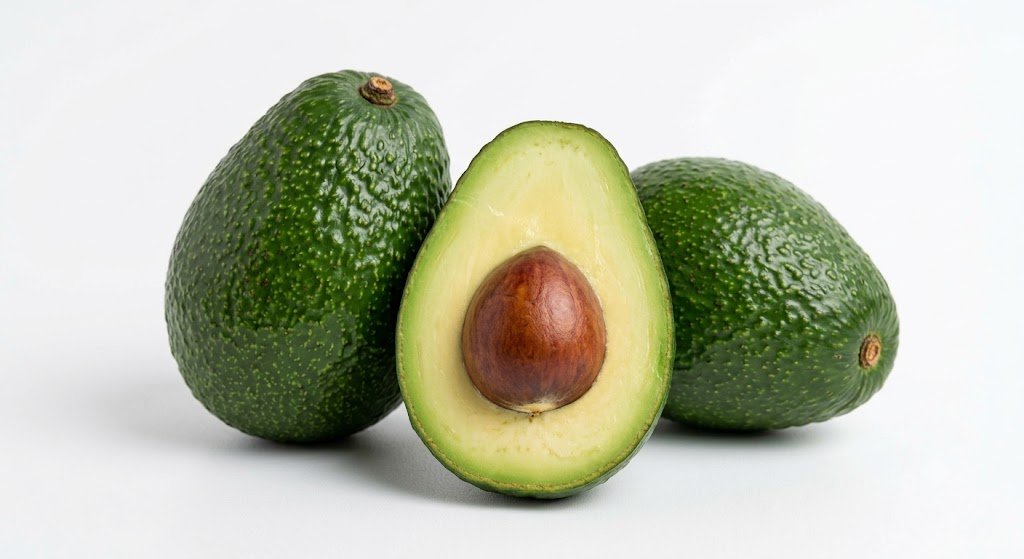

Avocado is a nutrient-dense fruit belonging to the laurel family (Lauraceae), grown for its large, pear-shaped, oil-rich fleshy berries. Known for its exceptionally creamy texture and mild, buttery flavor profile, this fruit has become a global health food phenomenon. Native to the tropical and subtropical regions of South-Central Mexico, it was domesticated thousands of years ago by ancient Mesoamerican civilizations. Today it’s grown across the Americas, Africa, Spain, and parts of Asia, and is prized in fresh guacamoles, breakfast toasts, nutrient-dense salads, and healthy smoothies.
Packed with healthy monounsaturated fats, essential vitamins, minerals, and dietary fiber, this unique fruit is valued for both its therapeutic density and its culinary versatility. This guide explores its history, nutritional profile, health benefits, traditional uses, cultivation methods, and practical ways to include it in your diet.
The History of Avocado & Its Cultural Importance
This fruit has a rich agricultural history rooted deeply in ancient Mesoamerica and later spread across the globe through trade and exploration.
Avocado Through the Ages
- Ancient Mesoamerican Roots: Domestication dates back over 5,000 years in Mexico, where ancient Aztecs revered it as a source of strength and vitality.
- The Spanish Discovery: Encountered by Spanish explorers in the 16th century, who translated its indigenous name into aguacate, leading eventually to the modern name “avocado.”
- Introduction to the West: Introduced to the United States and parts of Europe in the 19th and early 20th centuries, initially operating under the regional nickname “alligator pear.”
- Modern Global Phenomenon: Shifted from an exotic regional specialty to a worldwide staple, celebrated globally as a primary symbol of contemporary clean eating and nutrition.
Botanical Description of Avocado
Persea americana belongs to the Lauraceae family and is closely related to aromatic plants like cinnamon, bay laurel, and sassafras.
Plant Characteristics
- Growth: A large, broad-leaved evergreen tree capable of reaching 10 to 20 meters in height under natural forest conditions.
- Leaves: Large, glossy, dark green elliptic leaves arranged alternately along woody branches.
- Flowers: Small, greenish-yellow, inconspicuous blossoms that open in a unique male-and-female dual sequence to encourage cross-pollination.
- The Berry: Conceptually a large, single-seeded berry consisting of a leathery, pebbled outer skin (exocarp), a thick, buttery edible flesh (mesocarp), and a single large woody seed.
Growing Conditions
This fruit is a subtropical crop that thrives in frost-free environments with abundant sunshine and excellent wind protection.
- Ideal Temperature: 20–30°C for optimal growth; mature trees can tolerate brief, light chills, but prolonged frost will damage the crop.
- Soil Type: Well-drained, loose volcanic loam or sandy soil; highly sensitive to poor drainage and waterlogged roots.
- Propagation: Primarily propagated via grafting named cultivars (like the popular Hass or Fuerte) onto sturdy seedling rootstocks.
- Harvesting Season: Picked mature but firm; avocados uniquely do not ripen while still hanging on the tree tree and require a few days off the vine to soften into an edible state.
Nutritional Profile of Avocado
Unlike almost all other fruits that are high in natural sugars, avocado stands entirely apart as a rich source of healthy monounsaturated fats and fat-soluble nutrients.
Nutrients (Per 100g Raw Serving)
| Nutrient | Amount | Health Benefits |
| Energy | 160 kcal | Rich source of sustained, low-glycemic healthy energy |
| Monounsaturated Fat | 9.8g | Abundant oleic acid to support optimal heart lipid levels |
| Dietary Fiber | 6.7g | Superb blend of soluble and insoluble fiber for gut health |
| Potassium | 485mg | High mineral content supporting optimal fluid tracking |
| Vitamin E | 2.07mg | Potent fat-soluble antioxidant that protects cellular walls |
| Vitamin K | 21.0µg | Supports proper blood clotting mechanics and bone density |
| Vitamin B6 | 0.26mg | Essential for baseline energy metabolism and nerve health |
| Folate (B9) | 81.0µg | Vital for proper DNA structure and healthy cellular repair |
Note: The healthy fat matrix within an avocado massively increases the absorption of fat-soluble vitamins (A, D, E, and K) from other vegetables eaten alongside it. (Source: USDA FoodData Central)
Avocado Benefits for Your Everyday Health
1. Supports Cardiovascular Wellness
Packed with heart-healthy monounsaturated oleic acid, it actively assists the body in managing healthy blood lipid ratios and maintaining clear arterial flow.
2. Promotes Superior Digestive Health
Boasting nearly 7 grams of fiber per 100g, it provides excellent prebiotic nourishment for the gut microbiome, encouraging consistent motility and digestive ease.
3. Provides Deep Antioxidant Defense
Contains notable fat-soluble carotenoids like lutein and zeaxanthin, which actively shield delicate cellular matrices from systemic oxidative stress.
4. Supports Vision Longevity
The structural accumulation of lutein and zeaxanthin within the macular region of the eye helps filter out harmful blue light and supports aging vision.
5. Promotes Healthy Looking Skin
The potent combination of Vitamin E, Vitamin C, and healthy fatty acids locks in deep cellular hydration and supports natural collagen synthesis.
6. Supports Stable Blood Sugar Management
Featuring an exceptionally low glycemic index with negligible sugar content, it helps maintain a stable, flat post-meal glucose curve.
7. Enhances Nutrient Absorption Naturally
Acting as a natural nutrient booster, adding it to fresh salads allows your system to absorb significantly more lipid-soluble antioxidants from companion vegetables.
Traditional & Modern Culinary Uses for Avocado
1. Fresh Guacamole and Spreads
Mashing the ripe flesh with lime juice, sea salt, fresh cilantro, onions, and tomatoes creates a classic, rich accompaniment for daily meals.
2. Savory Breakfast Toast
Slicing or spreading the creamy green flesh across whole-grain artisanal sourdough toast creates a satisfying, nutrient-dense morning meal.
3. Creamy Nutrient Smoothies
Blending half a ripe avocado with leafy greens, bananas, and a liquid base provides a beautifully thick texture without requiring dairy.
4. Vibrant Salad Additions
Dicing the firm flesh into cubes adds a rich, velvety contrast to crisp green leaf vegetables and acidic citrus dressings.
How to Include Avocado in Your Diet
- Classic Breakfast Toast – Mash onto toasted bread, finishing with a pinch of red chili flakes and sea salt.
- Fresh Garden Salad – Toss uniform green cubes with fresh tomatoes, cucumbers, and a olive oil drizzle.
- Velvety Green Smoothie – Blend with fresh spinach, half a frozen banana, and cold almond milk.
- Savory Dinner Boat – Slice in half, remove the center stone, and fill the hollow with spiced chickpeas or salsa.
- Creamy Dressing Base – Puree with garlic, lemon juice, and herbs to create a healthy, oil-rich salad dressing.
Side Effects & Precautions
While generally safe and exceptionally beneficial for most people when consumed in normal dietary amounts, this fruit may cause:
- Mild digestive issues or bloating in individuals who have distinct sensitivities to high-fiber or specific short-chain carbohydrate groups (FODMAPs).
- Allergic cross-reactions for individuals diagnosed with latex allergies due to the presence of specific plant proteins.
- Caloric considerations for those managing strict daily balance profiles, as its rich healthy fat density makes it highly energetic.
Individuals exploring natural dietary modifications should store firm avocados at room temperature, transferring them to the refrigerator only once they become slightly soft to the touch to preserve freshness. (Source: Wikipedia: Avocado)
Conclusion
Persea americana is a nutrient-rich fruit celebrated for its unparalleled creamy structure, heart-healthy fat profile, and incredible culinary flexibility. From simple morning toast spreads to complex modern smoothies and classic fresh guacamoles, avocado continues to reign as an essential whole-food superfood across the globe. Whether enjoyed as a savory salad accent or a rich smoothie base, it delivers amazing life-giving value to a balanced lifestyle.