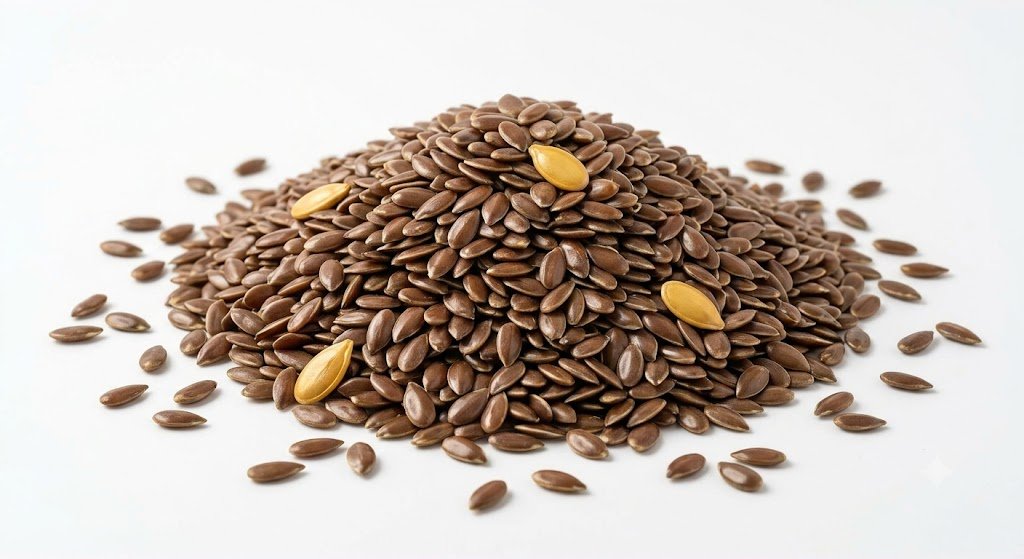

Flaxseeds, historically known as linseeds, are a highly nutrient-dense functional food derived from the small, glossy seeds of the flax plant (Linum usitatissimum). This ancient botanical product is widely celebrated across the globe for holding the single highest food concentration of dietary lignans among all plants. This historic food is globally recognized for delivering an exceptional natural combination of heart-healthy omega-3 fats and soluble mucilaginous fibers. Additionally, it features a beautifully warm golden or rich bronze color color profile alongside a crisp texture and a distinctively mild, toasty, and nutty flavor footprint. For this reason, it has become a foundational culinary and functional food staple in many international markets.
Originally, the parent plant species was native to the ancient, temperate river ecosystems of the Fertile Crescent in Western Asia. However, it was domesticated over nine thousand years ago during the very dawn of early human agricultural tracking setups. Later on, it spread rapidly across Europe, East Asia, and Northern Africa through ancient maritime commerce and complex monastic crop networks. Today, it is produced extensively across Canada, Russia, China, and the United States. Consequently, it is prized as a clean portable whole food nutrient booster, a texturizing baseline for egg-free baking, a metabolic cellular shield, and a modern longevity dietary staple.
Because it is packed with essential polyunsaturated lipids, protective plant protein matrices, and a massive density of alpha-linolenic acid (ALA) and antioxidant polyphenols, this ancient seed is highly valued. It offers incredible nutritional density alongside remarkable culinary versatility. Therefore, this comprehensive guide explores its history, nutritional profile, health advantages, traditional uses, cultivation frameworks, and practical ways to include it in your daily diet safely.
The Historic Journey of Flaxseeds & Their Cultural Importance
This premium botanical seed possesses a monumental agricultural history rooted deeply in early textile weaving and traditional holistic health tracking systems. Over time, it spread across the globe through continuous migration and trade.
The Ancient History of Flax Seed Layers
- The Linen and Lipid Double Asset: Early human societies across ancient Mesopotamia cultivated the crop extensively to extract both sturdy cloth fibers and survival fats. Growth parameters prioritized these fields because the dry seeds provided long-lasting metabolic energy during cold winter tracking cycles.
- The Classical Medical Foundations: Ancient Greek and Roman physicians heavily integrated the specific properties of the fresh seeds into early digestive recipes. As a result, Hippocrates famously documented utilizing the unrefined grains to soothe inflamed intestinal pathways and restore systemic balance.
- The Carolingian Health Mandate: King Charlemagne enacted strict agricultural laws in the 8th century commanding his subjects to consume the seeds daily. Consequently, this public policy successfully hardwired the functional superfood into the baseline food tracking frameworks of Northern Europe.
- Modern Lignan and Omega Validation: Food scientists isolated its unique phytoestrogen compound structures, specifically secoisolariciresinol diglucoside (SDG), in the late 20th century. As a result, it achieved massive contemporary popularity globally as a premier functional hormonal balance superfood.
Botanical Description of the Flax Plant
Linum usitatissimum belongs to the Linaceae family. For instance, it grows naturally as a highly delicate, slender annual herb completely distinct from standard commercial grain grass fields or sprawling woody vines.
Structural Characteristics of Unrefined Flaxseeds
- Growth: It grows naturally as an erect, very slender annual herbaceous plant. Usually, it reaches 0.6 to 1.2 meters in height and develops smooth, highly fibrous green stalks that produce commercial linen fiber arrays.
- Leaves: The plant produces small, alternate, narrow lanceolate green leaves measuring 2 to 4 cm in length. In addition, these delicate leaves feature three distinct parallel structural veins running from base to tip.
- Flowers: It bears attractive, five-petaled, bright sky-blue or pale purple blossoms arranged in loose clusters at the stem ends. Typically, these beautiful blossoms bloom fully only under morning sunbeams, relying primarily on self-pollination mechanisms.
- The Seed Capsule: It forms a small, globular, five-chambered capsule when fully mature. Furthermore, each structural capsule contains ten flat, glossy, teardrop-shaped seeds that safely shield the oil-dense internal kernel.
Ideal Growing Conditions for Maximum Flaxseeds Production
This plant is a classic cool-temperate, highly adaptable seasonal crop. Therefore, it requires moderate spring moisture and relatively low autumn templates to complete its seed-setting phase successfully.
- Ideal Temperature: It prefers cool growing climates between 10–22°C during its primary vegetative phase. However, it is highly sensitive to intense, burning tropical heatwaves during the crucial flowering window.
- Soil Type: It thrives best in well-drained, loose fertile silty loams or alluvial silt soils rich in organic matter. On the other hand, it absolutely cannot tolerate heavy, waterlogged clay that suffocates delicate taproot networks.
- Propagation: It is regularly grown from seeds sown directly into open field beds during early spring. Specifically, dense planting patterns help the narrow stalks stand upright while naturally crowding out competing weed growths.
- Harvesting Season: Farmers harvest the mature crop during late summer or early autumn when the seed capsules turn golden-brown and rattle under movement. Specifically, they utilize mechanical combine harvesters to gather the seeds before air-drying them immediately.
Nutritional Profile of Raw Flaxseeds
This unrefined seed is naturally dense in polyunsaturated fatty acids. Furthermore, it contains high amounts of dietary fiber, plant proteins, and protective phytoestrogens. As a result, it is a favorite among active individuals seeking sustained clean stamina tracking.
Essential Nutrients in Flaxseed Matrixes (Per 100g serving)
| Nutrient | Amount | Health Benefits |
| Energy | 534 kcal | Natural source of dense, clean, slow-releasing metabolic energy |
| Dietary Fiber | 27.3g | High fiber volume providing a balanced split of soluble and insoluble matrices |
| Alpha-Linolenic Acid (Omega-3) | 22.8g | Exceptionally high plant omega-3 content supporting systemic defense loops |
| Protein | 18.3g | High plant protein density supporting structural cellular repair |
| Magnesium | 392mg | Crucial mineral supporting deep muscle relaxation and nervous health |
| Thiamine (Vitamin B1) | 1.6mg | Vital B vitamin assisting optimal carbohydrate metabolism pathways |
| Lignans (Phytoestrogens) | 300mg | Record-breaking antioxidant density supporting optimal hormonal tracking |
Note: Sourced directly from whole grains, two tablespoons of ground seeds deliver over four grams of plant omega-3 ALA and close to four grams of fiber. (Source: USDA FoodData Central)
Flaxseeds Health Benefits for Your Everyday Well-being
1. Optimizes Hormonal Balance via High Lignans
Packed with the highest concentration of plant lignans globally, it provides structural phytoestrogens that bind to cellular receptors. Consequently, it assists the body in modulating healthy estrogen pathways, supporting cellular tissues in both men and women.
2. Lowers Systemic Cardiovascular and Blood Pressure Markers
Features an exceptional volume of alpha-linolenic acid and soluble fibers. As a result, it assists the body in maintaining optimal, clean blood pressure parameters, reduces circulating low-density lipoproteins, and shields arterial walls from stress.
3. Promotes Excellent Intestinal Transit and Comfort
Its unique mucilaginous fiber matrix works efficiently to soothe the gastrointestinal tract. Specifically, regular ground intake absorbs water to soften the stool, encourages consistent transit tracking, and fuels beneficial gut microfloras.
4. Stabilizes Post-Meal Blood Glucose Curves
The abundant combination of soluble mucilage and high-quality plant protein works in perfect synergy to slow down digestion. Specifically, it prevents sudden insulin spikes, making it an excellent functional baseline for long-term metabolic balance.
5. Supports Healthy Weight Management Templates
Contains a rich combination of healthy fats and expanding soluble fibers. For instance, incorporating the seeds into early meals helps trigger long-lasting satiety indicators, naturally lowering the urge to overeat throughout the day.
Traditional & Modern Culinary Uses for Flaxseeds
1. Functional Baking Flax Egg Substitutes
First, mix one tablespoon of finely ground flaxseeds with three tablespoons of warm water in a small bowl. Then, let it rest for ten minutes to develop a thick, gelatinous mucilage that substitutes perfectly for structural eggs in whole-grain baking.
2. Nutritious Morning Porridge Boosters
Combining a tablespoon of ground seeds directly into your warm morning oatmeal, amaranth bowls, or fresh yogurt yields a beautiful baseline. As a result, your breakfast gains an excellent, toasty nutty flavor footprint and massive omega-3 values.
3. High-Protein Smoothie Enhancements
Pouring two tablespoons of freshly milled seeds directly into cold plant-based protein shakes adds a rich, thick texture. Consequently, this blend acts as an excellent, highly satisfying meal perfect for daily macro tracking.
4. Wholesome Whole Grain Baking Blends
Stirring a quarter-cup of ground seeds into your homemade gluten-free bread, cracker, or muffin batters allows the dough to absorb a beautiful golden color and rustic crunch.
How to Include Flaxseeds in Your Daily Diet
- The Strict Grinding Rule: Always consume your flaxseeds in a freshly ground or milled format rather than whole; specifically, whole seeds possess an incredibly tough, cellulose outer shell that human digestive enzymes cannot break down, causing them to pass through the body completely undigested without releasing any nutrients.
- The Cold Storage Habit: Store your ground seeds inside an opaque airtight container placed in the refrigerator or freezer; specifically, their high polyunsaturated fat content makes them exceptionally sensitive to light and ambient room heat, which rapidly oxidizes the oils.
- Savory Hummus Swaps – Stir a tablespoon of ground flaxseeds straight into your homemade chickpea dips or avocado guacamoles before serving.
- Healthy Soup Thickeners – Whisk a tablespoon of ground seeds into simmering vegetable purees or lentil stews right before serving to add body.
- Zesty Salad Toppers – Sprinkle a teaspoon over fresh cucumber and green salads to add a subtle, nutritious crunch.
Side Effects & Precautions
While safe and highly beneficial for the general population, certain precautions apply:
- Consuming excessive, unmeasured quantities without drinking adequate fluids may trigger temporary gastrointestinal gas, bloating, or tracking friction due to the intense fiber payload.
- Medication Note: Due to their high soluble fiber volume, ground seeds can slightly slow the absorption of oral medications; therefore, it is best to take supplements or prescriptions an hour before or two hours after seed consumption.
- Pregnant individuals should maintain standard culinary intake amounts rather than massive therapeutic supplement doses due to the natural phytoestrogen activity.
The Final Quality Verdict on Unrefined Flaxseeds
Ultimately, individuals seeking to maximize their daily health advantages must prioritize purchasing organic whole brown or golden seeds and grinding them at home right before consumption. (Source: Wikipedia: Flax)
Conclusion
In summary, Linum usitatissimum is a nutrient-rich functional food celebrated for its exceptional lignan profile, plant-based omega-3 activation, and unparalleled baking utility. From simple everyday porridge adjustments to functional flax egg substitutes, high-protein smoothies, and baking blends, flaxseeds continue to reign as a vital foundational superfood seed across the earth. Whether eaten as a raw finishing topper or blended into home baking, they deliver fantastic life-giving value to a balanced lifestyle.
Therefore, start introducing ground flaxseed varieties into your weekly diet planning alongside target superfoods. Ultimately, you will enjoy their distinctively rich properties as part of a natural, healthy lifestyle.