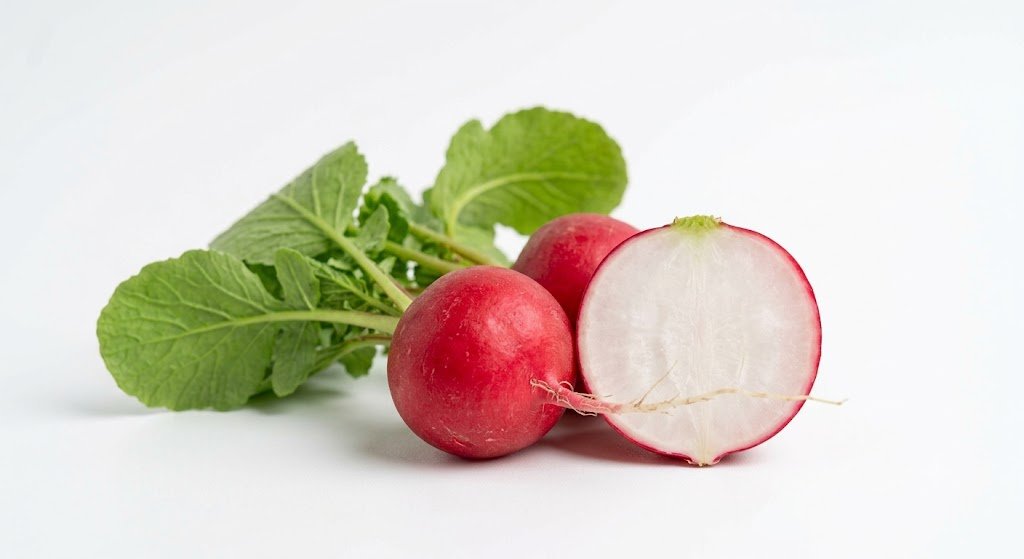

Radish is a nutrient-dense root vegetable belonging to the mustard family (Brassicaceae), grown for its crisp, starchy taproots and edible leafy greens. Known for its distinctively sharp, peppery flavor and crunchy texture, this vegetable has become a staple in kitchens worldwide. Native to mainland Asia or the Mediterranean region, it was domesticated thousands of years ago and spread across the globe through early exploration and ancient trade routes. Today it’s grown across Asia, Europe, and the Americas, and is prized in fresh salads, traditional curries, pickles, and stir-fries.
Packed with vitamins, minerals, dietary fiber, and beneficial plant compounds, this root vegetable is valued for both its nutritional density and its culinary versatility. This guide explores its history, nutritional profile, health benefits, traditional uses, cultivation methods, and practical ways to include it in your diet.
The History of Radish & Its Cultural Importance
This vegetable has a long agricultural history rooted in ancient civilizations and later spread across the globe through migration and trade.
Radish Through the Ages
- Ancient Egyptian Food: Cultivated widely before the construction of the pyramids, where historic records show it was a primary food source for labor forces.
- Greek and Roman Reverence: Highly valued in ancient Greece, where replicas of the root were reportedly cast in gold to honor its medicinal properties.
- South Asian Integration: Deeply embedded into traditional Asian agriculture, giving rise to large winter varieties like the Daikon or Mooli.
- Modern Popularity: Now one of the fastest-growing agricultural crops globally, celebrated for its refreshing crunch in seasonal salads and comforting cooked main dishes.
Botanical Description of Radish
Raphanus sativus belongs to the Brassicaceae family and is closely related to turnips, mustard greens, cabbage, and broccoli.
Plant Characteristics
- Growth: A fast-maturing, cool-season annual or biennial herb characterized by a low rosette of leaves.
- Leaves: Rough, lyrate-pinnate green leaves that are entirely edible and rich in micronutrients.
- Flowers: Small, four-petaled blossoms ranging from white to pale violet, appearing when the plant bolts.
- Taproot: The swollen storage organ, displaying varied shapes (globular to long and tapered) and exterior colors including red, white, purple, black, and bi-color.
Growing Conditions
This vegetable is a highly resilient cool-season crop that prefers mild temperatures and consistent watering to maintain a crisp texture.
- Ideal Temperature: 15–20°C for optimal root development; intense heat can cause the root to become woody and unpleasantly pungent.
- Soil Type: Loose, well-drained sandy loam soil free of stones, maintaining a neutral pH range of 6.0 to 7.0.
- Propagation: Grown directly from seeds sown straight into open garden beds or field rows.
- Harvesting Season: Ready to harvest exceptionally fast, typically 3 to 5 weeks after sowing for small varieties, and 60–90 days for larger winter roots.
Nutritional Profile of Radish
This vegetable is incredibly low in calories yet provides unique sulfur compounds and essential minerals, making it a favorite among hydration-conscious eaters.
Nutrients (Per 100g Raw Serving)
| Nutrient | Amount | Health Benefits |
| Energy | 16 kcal | Exceptionally low-calorie food for crisp hydration |
| Protein | 0.7g | Supplies minimal foundational plant proteins |
| Dietary Fiber | 1.6g | Supports proper gastrointestinal tracking and comfort |
| Vitamin C | 14.8mg | Promotes immune cellular defense and collagen repair |
| Folate (B9) | 25.0µg | Vital for baseline DNA synthesis and cellular replication |
| Potassium | 233mg | Regulates healthy fluid balances and cardiovascular metrics |
| Calcium | 25mg | Contributes to steady structural bone integrity |
| Antioxidants | Present | Actively neutralizes free radicals to protect body cells |
Note: Nutrient values vary slightly depending on growing conditions, freshness, and the specific cultivar used. (Source: USDA FoodData Central)
Radish Benefits for Your Everyday Health
1. Supports Natural Liver Detoxification
Contains specialized compounds like isothiocyanates and glucosinolates that assist liver enzymes in processing and clearing metabolic waste products efficiently.
2. Promotes Hydration and Weight Management
Composed of over 95% water and very few calories, it provides a highly satisfying crunch that fits perfectly into calorie-conscious dietary plans.
3. Supports Cardiovascular Wellness
Its natural potassium content works alongside specific anthocyanin antioxidants to support optimal blood pressure regulation and arterial wall elasticity.
4. Promotes Healthy Digestive Function
The dietary fiber content stimulates healthy bowel movements, preventing sluggish transit times and supporting overall digestive tract comfort.
5. Supports Immune Health
Providing a helpful dose of Vitamin C in every crunchy serving, it reinforces the body’s primary line of defense against environmental stress.
6. Supports Healthy Skin
The combination of high water content, Vitamin C, and zinc helps maintain baseline skin hydration and cellular renewal.
7. Enhances Meals Naturally
Brings a sharp, distinct peppery note and bright color to daily dishes without adding processed sodium or fats.
Traditional & Modern Culinary Uses for Radish
1. Fresh Crispy Salads
Slicing the raw root into thin rounds or matchsticks adds an immediate punch of spice and moisture to mixed green salads.
2. Pickled Condiments
Submerging sliced radishes in a simple vinegar, salt, and sugar brine tones down the sharp bite, resulting in a bright, tangy topping.
3. Stirs, Soups, and Curries (Mooli Ki Sabzi)
Cooking the diced root or grating it into traditional stews softens its spicy flavor profile, turning it sweet and intensely savory.
4. Nutritious Greens Sauté
The green leafy tops should not be discarded; they can be washed thoroughly and sautéed with garlic and spices just like spinach.
How to Include Radish in Your Diet
- Raw Crunch Salad – Toss paper-thin slices with lemon juice, sea salt, and fresh herbs.
- Traditional Parathas – Grate the white root, squeeze out excess water, and use it as a spiced stuffing for flatbreads.
- Tangy Quick Pickles – Steep thin slices in rice vinegar and salt for a crunchy taco or bowl topping.
- Roasted Wedges – Toss with olive oil and roast in the oven until the sharp bite mellows into a buttery sweetness.
- Nutrient-Dense Greens – Sauté the clean green tops with cumin seeds and a splash of cold-pressed oil.
Side Effects & Precautions
While generally safe and beneficial for most people when consumed in normal dietary amounts, this vegetable may cause:
- Mild heartburn or gas in individuals with highly sensitive stomachs due to its natural sulfurous compounds.
- Gallbladder discomfort for individuals diagnosed with gallstones, as radishes can stimulate bile flow.
- Interference with baseline thyroid tracking if enormous amounts are eaten raw over long periods due to trace goitrogens.
Individuals seeking to optimize their daily diet should balance its peppery nature with mild greens, healthy fats, and clean proteins. (Source: Wikipedia: Radish)
Conclusion
Raphanus sativus is a nutrient-rich vegetable celebrated for its refreshing crunch, fast growth cycle, and incredible culinary versatility. From simple raw salad garnishes to slow-simmered regional curries and tangy pickles, radish provides an exceptional burst of flavor and wellness properties to global food cultures. Whether you enjoy the fiery red globes or the long white winter roots, it delivers fantastic life-giving value to a balanced lifestyle.
Start introducing radish into your weekly shopping basket and enjoy its sharp flavor profile and digestive benefits as part of a natural, healthy lifestyle. For more such posts, keep visiting Naturefix.in