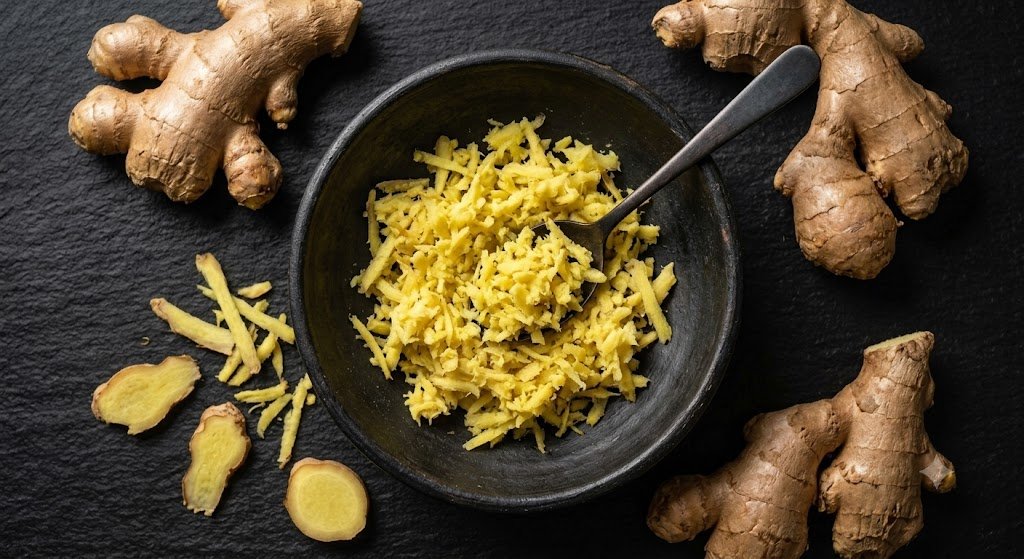

Ginger is a highly nutrient-dense aromatic whole food spice. It is derived from the subterranean, branching rhizome of the perennial herbaceous plant (Zingiber officinale). For thousands of years, global civilizations have revered this knobby root as a therapeutic and culinary cornerstone. Visually, it features a tough, fibrous tan skin. This outer layer shields an intensely vibrant, pale yellow internal flesh. Furthermore, this historic food holds an exceptional natural concentration of cell-defending gingerol compounds.
In addition, it offers an incredible density of metabolic-supporting trace elements. Fresh ginger features a beautifully crisp and firm texture. However, it yields a smooth, fine dust when dried and milled. Culturally, it carries a distinctively sharp, fiery, and pungent aromatic flavor footprint. For this reason, it has become a foundational functional food staple in many international markets.
Originally, the parent spice species was native to the lush, tropical lowlands of Southeast Asia. It domesticated thousands of years ago during early Austronesian agricultural expansion paths. Later on, it spread rapidly across India, China, and the Mediterranean basin. This expansion occurred through ancient maritime spice routes and complex Roman trade networks. Today, it is produced extensively across India, Nigeria, China, and Jamaica. Consequently, it is prized as a clean portable culinary accent. It serves as a foundational baseline for warming herbal infusions. Therefore, modern wellness tracking systems value it as a cellular shield and a longevity dietary staple.
Because it is packed with essential dietary fiber and plant sterols, this botanical root is highly valued. It offers incredible nutritional density alongside remarkable culinary versatility. Therefore, this comprehensive guide explores its history, nutritional profile, health advantages, and practical uses.
The Historic Journey of Ginger & Its Cultural Importance
This premium aromatic spice possesses a monumental agricultural history. It is rooted deeply in early maritime commerce and traditional planetary holistic health tracking models. Over time, it spread across the globe through continuous migration and trade.
The Ancient History of Zingiber Officinale Grass
-
The Maritime Austronesian Lifelines: Early seafaring human societies cultivated the highly portable rhizomes extensively on voyages. Growth parameters prioritized these plants because the fresh roots provided excellent defense assets. Consequently, sailors used them against coastal wellness challenges while flavoring simple survival rations cleanly.
-
The Classical Chinese Medical Staples: Historical medical texts heavily documented the daily integration of this warming spice. For instance, the philosopher Confucius regularly consumed it. As a structural wellness practice, scholars chewed the unrefined slices to harmonize internal bodily tracking pathways. Therefore, they used it to clear respiratory stagnation.
-
The Roman Premium Luxury Trades: Imperial Western merchants imported the dried roots across extensive caravan trails. They sold it as a high-tariff luxury product. Consequently, Roman culinary masters heavily integrated the spice into elite banquet sauces to display status. In addition, they used it to optimize guest digestive processing matrices.
-
Modern Bioactive Validation: Food scientists isolated its unique chemical baseline in the late 20th century. Specifically, they discovered highly concentrated gingerols, shogaols, and active zingerone molecules. Therefore, it achieved massive contemporary popularity globally as a premier functional anti-nausea superfood.
Botanical Description of the Rhizome Spice Plant
Zingiber officinale belongs exclusively to the ginger family (Zingiberaceae). This makes it a close relative to turmeric and cardamom. For instance, it grows naturally as a vibrant reed-like perennial. Thus, it remains completely separate from dryland wheat fields or woody orchard trees.
Structural Characteristics of Unrefined Ginger Rhizomes
-
Growth: It grows naturally as an erect, leafy perennial herb. Usually, it reaches 60 to 120 cm in height. It sends up slender, reed-like pseudostems. These stems are formed by the tightly wrapped bases of its long leaf structures.
-
Leaves: The plant produces alternate, narrow, lanceolate green leaves measuring 15 to 30 cm in length. In addition, these smooth leaves feature a glossy upper surface. This texture captures tropical light arrays efficiently to fuel underground root expansion loops.
-
Flowers: It bears compact, cone-like terminal spikes of pale green bracts. These bracts enclose small, tubular yellow-green blossoms. Typically, these beautiful flower heads emerge directly from the root base on separate stalks. Therefore, they do not grow from the leafy stems.
-
The Branching Rhizome: It forms thick, fleshy, subterranean stems or rhizomes. These stems spread horizontally beneath the topsoil layers. Furthermore, these dense, fibrous units function as primary storage vaults. They protect the plant’s essential starches and active volatile oil matrices.
Ideal Growing Conditions for Maximum Ginger Yield
This plant is a shade-tolerant, ultra-tropical seasonal crop. Therefore, it requires high ambient humidity, heavy seasonal downpours, and frost-free soil environments to complete its root lifecycle successfully.
-
Ideal Temperature: It prefers hot, steamy growing climates between 22–32°C for optimal rhizome expansion. This heat optimizes compound synthesis. However, it absolutely cannot tolerate frost or freezing drafts. In addition, scorching direct sun fields can blister the delicate leaf reeds.
-
Soil Type: It thrives best in deeply drained, loose, highly fertile alluvial loams. It prefers silty clay loams rich in organic humic matter with a slightly acidic pH profile. On the other hand, it cannot tolerate compacted clay beds that cause root rot.
-
Propagation: It is regularly grown from small rhizome pieces called “sets.” These seed pieces must display active growing buds or eyes. Specifically, modern organic setups plant these segments in deep trenches. They hill up loose soil continuously over the stalks to encourage dense root tracking blocks.
-
Harvesting Season: Farmers harvest the mature crop during early winter. This occurs roughly 8 to 10 months after planting. At this stage, the tall green stalks turn yellow and wither naturally. Specifically, they mechanically lift the rhizomes before washing and curing the roots immediately.
Nutritional Profile of Fresh Ginger Root
This unrefined spice root is naturally dense in essential minerals. Furthermore, it contains high amounts of dietary fiber, complex carbohydrates, and protective volatile compounds. As a result, it is a favorite among active individuals seeking sustained clean stamina tracking.
Essential Nutrients in Ginger Plant Matrices (Per 100g raw rhizome serving)
| Nutrient | Amount | Health Benefits |
| Energy | 80 kcal | Source of intense, active, tissue-warming micronutrient density |
| Total Carbohydrates | 17.8g | Stable complex carbohydrates providing sustained energy fuel loops |
| Potassium | 415mg | Crucial mineral supporting clean blood pressure curves and heart health |
| Dietary Fiber | 2.0g | Clean fiber volume supporting exceptional gastrointestinal tracking |
| Magnesium | 43.0mg | Supports deep muscle relaxation and optimal nervous system health |
| Vitamin C | 5.0mg | Water-soluble antioxidant supporting immune cell defense loops |
| Gingerol Oils | Active | Powerful phenolic resin downregulating systemic tissue inflammation |
Note: Boasting a remarkably complex biochemical array, a single tablespoon of fresh shavings delivers dense functional protection. (Source: USDA FoodData Central)
Ginger Health Benefits for Your Everyday Well-being
1. Eliminates Nausea and Motion Distress via Gingerols
Packed with massive concentrations of active gingerol and shogaol resins, it functions as a highly effective antagonist against serotonin receptors in the gut. Consequently, it assists the body in completely shutting down nausea signaling loops. Furthermore, it eases motion sickness and targets morning discomfort effectively.
2. Calms Gastrointestinal Motility and Bloating Friction
Features an exceptional capability to accelerate gastric emptying times. In addition, it tones intestinal smooth muscles. As a result, it assists the body in promoting swift digestive transit tracking. Therefore, it eliminates painful stomach cramps and clears trapped intestinal gases cleanly.
3. Downregulates Systemic Joint and Tissue Soreness
Its unique volatile oil compounds actively inhibit the synthesis of inflammatory prostaglandin and leukotriene markers. Specifically, regular dietary intake helps soothe chronic joint friction. Consequently, it improves knee flexibility templates and lowers post-exercise muscle fatigue.
4. Regulates Cardiovascular and Circulation Pathways
Contains a remarkable volume of natural potassium. This mineral works in perfect synergy with micro-vascular linings. For example, incorporating the spice into daily meals relaxes smooth arterial walls. Therefore, it helps maintain clean blood pressure parameters and encourages warming, balanced peripheral circulation tracks.
5. Supports Metabolic Balance and Insulin Sensitivity
The abundant phenolic compounds work efficiently to optimize glucose uptake within skeletal muscle tissue loops. Specifically, it downregulates fast insulin surges. Consequently, it serves as an excellent baseline food asset for balancing hemoglobin A1c. Therefore, it guards metabolic pathways smoothly.
Traditional & Modern Culinary Uses for Ginger
1. Warming Authentic Fresh Ginger Teas
First, slice a 2-inch segment of clean fresh ginger rhizome into thin rounds. Then, simmer the pieces inside a pot with two cups of pure water for 15 minutes. After that, strain the liquid. Finally, add a squeeze of fresh lemon juice and raw honey to build an elite warming baseline drink.
2. Aromatic South Asian Stir-Fry Bases
First, mince your fresh ginger and crush your garlic. Next, combine them systematically with chopped green onions into a hot skillet with sesame oil. As a result, your stir-fried vegetables or tofu gain an excellent pungent aroma. Furthermore, they develop a deep flavor footprint.
3. Zesty Cold Pressed Wellness Shots
First, gather your fresh root pieces and fresh turmeric. Next, blend them with orange juice and a pinch of black pepper inside a high-speed juicer. This process produces a bold finishing liquid. Consequently, this blend acts as an excellent morning cellular shield.
4. Spiced Whole Grain Baking Batters
First, measure a teaspoon of fine dry powder. Next, stir it directly into your homemade gluten-free gingerbread or muffin batters. This allows the dough to capture a beautiful golden color. In addition, it delivers a rustic sweet spice tracking profile.
How to Include Ginger in Your Daily Diet
-
The Spoon Peeling Technique: Always use the edge of a simple metal spoon to scrape away the thin skin of fresh roots. Specifically, this traditional method strips away the paper rind cleanly. Therefore, it protects the oil-dense flesh sitting right below the surface.
-
The Grating Integration Habit: Try to grate fresh roots using a microplane right into your dishes at the final second. Specifically, fine grating breaks the fibrous cells open. Consequently, it releases 100 percent of the active gingerol payload cleanly.
-
Morning Hot Oats Upgrades – Whisk a half-teaspoon of fresh grated ginger straight into your warm morning oatmeal or chia puddings. Therefore, you can easily vary your macro tracking.
-
Nutritious Hummus Boosters – Blend fresh minced ginger directly into your homemade carrot or chickpea dips. In addition, this adjusts your flavor layout.
-
Warming Soup Enrichers – Drop a tablespoon of fresh juiced root straight into your simmering sweet potato or lentil soups right before serving. Consequently, you will add excellent body to the dish.
Side Effects & Precautions
While safe and highly beneficial for the general population, certain precautions apply:
-
Consuming excessive supplemental quantities may trigger temporary heartburn. Furthermore, it can cause mild stomach burning or mouth tracking friction due to the intense spice payload.
-
Medication Note: This spice naturally encourages fluid circulation. Therefore, individuals managing active blood-thinning therapies should coordinate with their medical professional before introducing massive daily therapeutic extract doses.
-
Store fresh unpeeled roots loosely wrapped in a paper towel. Place them inside the refrigerator crisper drawer. Alternatively, you can freeze whole roots indefinitely to grate fresh as needed.
The Final Quality Verdict on Unrefined Ginger Rhizomes
Ultimately, individuals seeking to maximize their daily health advantages must prioritize firm, heavy fresh roots. They should select roots displaying smooth skin over shriveled store options. In addition, they must avoid heavily sweetened commercial candied variants processed with white sugar solutions. (Source: Wikipedia: Ginger)
Conclusion
In summary, Zingiber officinale is a nutrient-rich functional food. It is celebrated for its exceptional gingerol antioxidant matrix, anti-nausea protection, and unparalleled culinary utility. From simple everyday warming teas to aromatic stir-fry bases, ginger continues to reign as a vital foundational superfood spice across the earth. Whether eaten as a fresh grated zesty finish or blended into warm winter stews, it delivers fantastic value to a balanced lifestyle.
Therefore, start introducing raw ginger varieties into your weekly diet planning alongside target superfoods. Ultimately, you will enjoy their distinctively rich flavor and protective properties as part of a natural, healthy lifestyle.