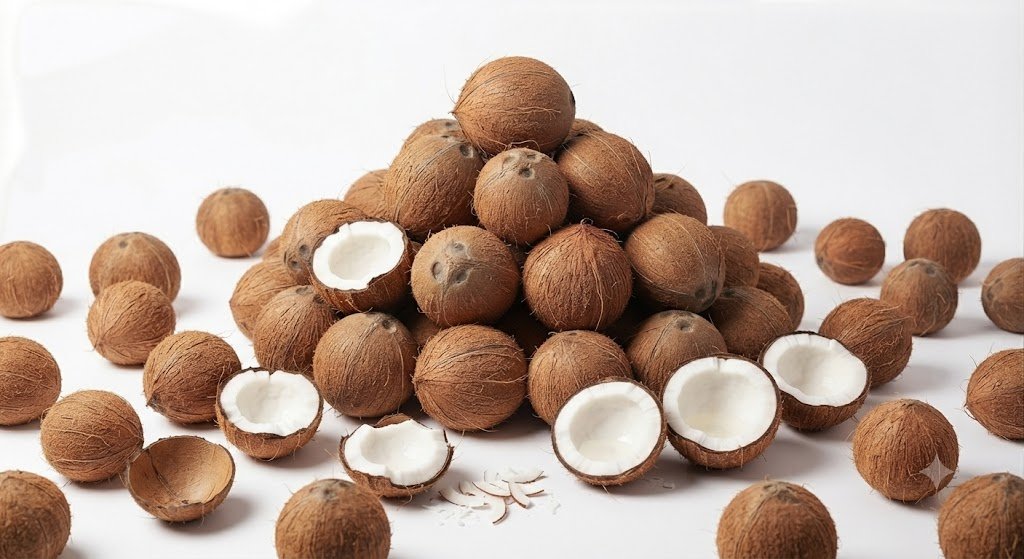

Coconut (Cocos nucifera) stands out as a versatile tropical fruit, and people widely renown it for its impressive nutritional value, culinary uses, medicinal properties, and cultural significance. Often, societies refer to it as the “Tree of Life” because the coconut palm provides essential food, water, oil, fiber, and timber, which makes it one of the most valuable tropical plants globally. Originally native to tropical coastal regions of the Indo-Pacific, farmers now cultivate these crops extensively across Asia, Africa, the Pacific Islands, the Caribbean, and South America.
Because it contains rich amounts of healthy fats, dietary fiber, vitamins, minerals, electrolytes, and antioxidants, experts widely recognize this produce for supporting hydration, heart health, digestion, skin health, and overall wellness. Furthermore, this guide explores its history, nutritional profile, health benefits, medicinal uses, cultivation, and delicious ways to enjoy the harvest.
Historical Significance & Cultural Importance
For thousands of years, humans have cultivated the plant, and it plays an essential role in the traditions, cuisines, and economies of many tropical countries. Moreover, it symbolizes prosperity, purity, hospitality, and abundance.
-
Indian Tradition: Hindus consider the food item sacred, and they offer it during religious ceremonies, festivals, and weddings as a symbol of purity and good fortune.
-
Pacific Island Cultures: Locals frequently call it the “Tree of Life” because they utilize nearly every part of the palm for food, shelter, clothing, and tools.
-
Southeast Asian Heritage: Communities have long relied on the harvest as an essential ingredient in traditional cooking, herbal practices, and daily life.
-
Caribbean Culture: Residents incorporate the item widely into beverages, desserts, curries, and traditional dishes throughout the region.
Botanical Description
Botanists classify the species within the Arecaceae family, and scientists formally designate it as Cocos nucifera.
Plant Characteristics
-
Growth: The tall evergreen palm grows approximately 20–30 meters in height.
-
Leaves: Large, feather-like fronds extend up to 6 meters long.
-
Flowers: The tree produces small, cream-colored blooms arranged in clusters.
-
Fruit: A large, fibrous drupe comprises an outer husk, a hard shell, white edible kernel flesh, and refreshing liquid.
Cultivation & Growing Conditions
The crop thrives naturally in tropical coastal regions characterized by abundant sunshine and high humidity.
-
Ideal Temperature: Farmers look for 27–32°C to guarantee healthy growth and optimal fruit production.
-
Soil Type: Well-drained sandy or loamy soil featuring good moisture retention works best.
-
Propagation: Growers primarily propagate the species from mature nuts functioning as seeds.
-
Harvesting Season: Palms yield fruit continuously throughout the year, while workers conduct harvesting every 45–60 days depending on the specific variety.
Nutritional Profile
Naturally rich in components, the item supplies healthy fats, dietary fiber, essential minerals, and natural electrolytes.
Nutrients (Per 100g Serving)
| Nutrient | Amount | Health Benefits |
| Calories | 354 kcal | Provides long-lasting energy |
| Dietary Fiber | 9 g | Supports digestive health |
| Potassium | 356 mg | Supports heart and muscle function |
| Magnesium | 32 mg | Supports muscle and nerve function |
| Manganese | 1.5 mg | Supports metabolism and bone health |
| Iron | 2.4 mg | Supports normal oxygen transport |
| Healthy Fats | 33 g | Provides energy and supports nutrient absorption |
Health Benefits
-
Supports Hydration: Tender liquid naturally contains electrolytes like potassium and magnesium, which help replenish fluids after exercise or during hot weather while creating a refreshing, naturally low-fat beverage.
-
Promotes Digestive Health: The edible kernel contains abundant dietary fiber that fosters regular bowel movements, contributes to a healthy digestive system, and helps increase feelings of fullness during a balanced diet.
-
Supports Heart Health: The food supplies vital minerals such as potassium that support normal heart function, fitting smoothly into a balanced diet when individuals consume appropriate portions instead of heavily processed snacks.
-
Promotes Healthy Skin and Hair: Natural oil extracted from the harvest serves widely as an organic moisturizer for skin and hair, delivering antioxidants that protect cells from oxidative stress and minimize moisture loss.
-
Provides Natural Energy: The item features healthy fats that supply a sustained source of energy, turning it into an exceptional ingredient for smoothies, breakfast dishes, and healthy snacks favored by active individuals.
Medicinal & Culinary Uses
-
Tender Beverage: Individuals can drink fresh tender liquid chilled to enjoy a naturally refreshing drink rich in electrolytes.
-
Smoothie: Chefs can blend fresh kernel portions with banana, yogurt, and liquid to create a creamy tropical drink.
-
Topical Care: People apply pure virgin oil directly to the skin or hair to help lock in moisture and alleviate dryness.
-
Chutney: Cooks blend freshly grated portions with roasted lentils, green chilies, ginger, and curry leaves to prepare a traditional savory accompaniment.
Scientific Research
Several scientific studies emphasize the value of this tropical produce:
-
The natural liquid functions as an organic source of electrolytes that actively supports hydration.
-
Virgin oil houses medium-chain triglycerides (MCTs), which the human body metabolizes differently compared to many other dietary fats.
-
The food contains antioxidants and essential minerals that contribute to overall nutritional intake.
How to Include the Harvest in Your Diet
-
Freshly Eaten: Enjoy raw kernel pieces as a naturally nutritious snack.
-
Tender Liquid: Consume it chilled for instant hydration.
-
Smoothies: Combine it with tropical fruits and yogurt.
-
Traditional Dishes: Serve chutney alongside traditional South Indian recipes or incorporate milk into soups and curries.
-
Desserts & Granola: Add grated portions to cakes, puddings, laddoos, and cookies, or sprinkle dried flakes over morning oatmeal.
Side Effects & Precautions
Although safe for most people, excessive consumption may trigger:
-
Elevated calorie intake because the kernel is highly energy-dense.
-
Digestive discomfort if individuals ingest very large quantities.
-
Allergic reactions in people possessing specific allergies, although these instances remain uncommon.
-
Furthermore, people managing specific dietary restrictions should consume these products in moderation as part of a balanced diet.
Ultimately, this versatile and nutritious tropical fruit delivers healthy fats, dietary fiber, electrolytes, vitamins, and essential minerals. Whether individuals enjoy it as tender liquid, fresh kernel, milk, oil, or grated flakes in traditional recipes, it delivers exceptional culinary versatility and nutritional value, supporting hydration, digestion, skin health, and overall wellness in daily meals.