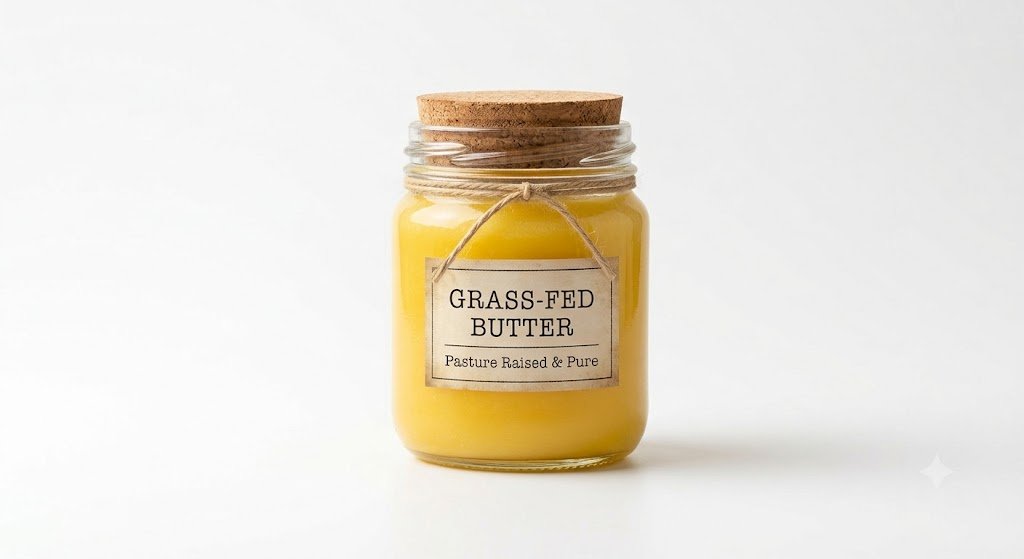

Grass-fed butter is a highly nutrient-dense natural fat derived from the traditional churning of cream produced by cows that graze exclusively on fresh pasture grasses. Specifically, this vibrant dairy lipid is distinguished by its striking deep yellow color, which reflects a high natural concentration of fat-soluble vitamins and plant pigments. This historic fat is widely celebrated across the globe for holding exceptional concentrations of bone-protecting vitamins and clean metabolic fatty acids. Additionally, it features a beautifully rich, intensely creamy, sweet, and distinctly clean herbal flavor profile. For this reason, it has become a foundational culinary and functional fat staple in many international markets.
Originally, the domestication of dairy cattle occurred thousands of years ago during the dawn of early human pastoral agriculture. Because wild ruminants naturally grazed on open green pastures, traditional early butter was inherently grass-fed, providing a dense source of fat-soluble nourishment that sustained ancestral populations through cold seasons. Later on, industrial farming models shifted herds toward grain feeds, which severely depleted the nutritional density of standard commercial dairy products. Today, enlightened consumers are actively returning to authentic pasture-based systems. Consequently, this clean lipid is prized in wholesome whole-grain baking, rich morning bullet beverages, light pan sautés, savory finishing spreads, and modern paleolithic or ketogenic dietary frameworks.
Because it is packed with highly stable saturated fats, essential fat-soluble nutrients, and unique active components like Vitamin K2 and Conjugated Linoleic Acid (CLA), this pasture fat is highly valued. It offers incredible nutritional density alongside remarkable culinary versatility. Therefore, this comprehensive guide explores its history, nutritional profile, health advantages, traditional uses, cultivation frameworks, and practical ways to include it in your daily diet safely.
The Deep History of Grass-Fed Butter & Its Cultural Significance
This premium dairy lipid possesses a monumental agricultural history rooted deeply in early human civilization survival and traditional nutritional tracking. Over time, it spread across the globe through continuous migration and trade.
The Ancient Journey of Pasture-Raised Dairy Fats
- The Early Nomad Discovery: Early human societies traveling across Eurasian steppes accidentally discovered butter production inside leather milk bags around 3000 BCE. Growth parameters prioritized these dense fats because they provided essential, long-lasting energy for moving tribes.
- The Celtic and Nordic Wealth Metric: Ancient northern European cultures highly valued the rich yellow blocks as a supreme sign of agricultural prosperity and food security. Consequently, historic communities frequently buried large kegs of butter inside cold peat bogs to preserve them for years.
- Traditional Tibetan Health Traditions: High-altitude mountain populations heavily integrated the properties of the fresh pasture lipids into early daily survival strategies. As a result, they utilized it to fuel their bodies against freezing temperatures by blending it into hot black tea.
- Modern Vitamin K2 Validation: Food scientists isolated its unique fat-soluble nutrient matrix, particularly the synergy between Vitamin K2 and Activator X, in the late 20th century. Therefore, it achieved massive contemporary popularity globally as a premium heart and bone superfood fat.
Physical Creation & Sourcing of Grass-Fed Butter
The production of high-quality grass-fed butter requires sourcing pristine milk from healthy dairy animals raised under strict pasture-based management.
Sourcing Characteristics of Grass-Fed Butter Lipids
- The Pasture Grazing Phase: Ruminant cows graze freely on a rich diversity of live green grasses, clovers, and deep-rooted wild herbs. Churning this fresh milk yields a deeply golden fat packed with high volumes of natural beta-carotene.
- The Cream Separation Step: Fresh raw milk is gathered and allowed to rest systematically so the light, fat-rich cream naturally rises to the top. In addition, modern organic facilities utilize mechanical separators to isolate the clean liquid cream gently.
- The Churning Mechanics: The isolated cream is cooled down and agitated continuously inside traditional or modern churning barrels. Typically, this physical exposure forces the individual fat globules to rupture, binding together into solid clumps while expelling liquid buttermilk.
- The Final Washing Phase: The solid mass is thoroughly washed with pure cold water and kneaded carefully to strip away any remaining milk sugars. Furthermore, this meticulous step maximizes the structural shelf stability of the final solid blocks.
Ideal Pastoral Conditions for Premium Grass-Fed Butter Production
To yield the most therapeutic fat profile, the dairy cattle must graze on nutrient-dense pasture fields managed under optimal seasonal conditions.
- Ideal Temperature: Dairy herds thrive best in maritime temperate coastal zones maintaining climates between 12–22°C for continuous grass growth. However, frozen winter soils force herds inside, temporarily altering the fat macro values.
- Pasture Soil Type: Cattle must graze on deeply drained, loose fertile soils or volcanic alluvial loams that support a lush, mineral-dense grass carpet. On the other hand, overgrazed or chemically treated fields yield nutrient-depleted milk fat.
- Propagation and Breed Care: Hardy heritage breeds like Jersey or Guernsey cows are carefully chosen for their natural capacity to convert grass fibers into exceptional milk solids. Specifically, avoiding synthetic growth hormones ensures the fat output remains clean.
- Harvesting and Processing Timing: Farmers collect peak milk yields during the lush spring and summer grazing cycles. Specifically, processing the fresh cream during active green grass cycles locks in maximum amounts of active Vitamin K2 and CLA.
Nutritional Profile of Raw Grass-Fed Butter
This unrefined dairy fat is naturally dense in fat-soluble vitamins. Furthermore, it contains high amounts of stable structural lipids, short-chain fatty acids, and unique metabolic elements. As a result, it is a favorite among active individuals seeking sustained clean stamina tracking.
Essential Nutrients in Pasture-Raised Dairy Fats (Per 100g serving)
| Nutrient | Amount | Health Benefits |
| Energy | 717 kcal | Natural source of dense, clean, slow-releasing metabolic energy |
| Total Fat | 81.0g | High-quality lipid matrix providing foundational cellular energy |
| Saturated Fat | 51.3g | Highly stable structural lipids providing excellent heat resistance |
| Monounsaturated Fat | 21.0g | Healthy monounsaturated fatty acids supporting optimal arterial curves |
| Conjugated Linoleic Acid (CLA) | 1.2g | Unique metabolic lipid supporting healthy lean body mass ratios |
| Vitamin A (Retinol) | 2499 IU | Robust fat-soluble vitamin supporting optimal vision and thyroid metrics |
| Vitamin K2 (MK-4) | 28.0µg | Critical trace vitamin directing calcium safely into skeletal structures |
Note: Sourced directly from 100% pasture-fed herds, it holds up to 500% more CLA and double the omega-3 content of standard industrial grain-fed butter options. (Source: USDA FoodData Central)
Grass-Fed Butter Health Benefits for Your Everyday Well-being
1. Directs Calcium Safely via High Vitamin K2
Packed with massive concentrations of active Vitamin K2 (specifically the highly bio-available MK-4 form), it activates critical bone proteins like osteocalcin. Consequently, it assists the body in depositing calcium directly into skeletal matrixes while keeping it out of arterial walls.
2. Promotes Cardiovascular Wellness via CLA Synergy
Features an exceptional volume of natural Conjugated Linoleic Acid. Because this specialized lipid works efficiently with circulatory health systems, it assists the body in maintaining optimal blood lipid metrics and shields vascular walls from stress.
3. Fuels the Gut Lining via Natural Butyrate
Its natural short-chain fatty acid matrix provides immediate cellular energy to the colon lining. Specifically, regular intake helps reinforce the integrity of tight intestinal junctions, clearing away discomfort and supporting digestive transit tracking.
4. Delivers Excellent Stability for Daily Cooking
The abundant saturated molecular bonds create a highly resilient fat structure boasting a safe smoke point of 150°C. Therefore, it stands as an excellent, oxidation-resistant option for regular light pan sautés, baking, and stew enrichment.
5. Enhances Fat-Soluble Nutrient Assimilation
The pasture fat works in perfect synergy with dietary nutrients. For example, melting a small pat over your fresh steamed broccoli or roasted carrots increases the absorption of active plant carotenating pigments significantly.
Traditional & Modern Culinary Uses for Grass-Fed Butter
1. Wholesome Whole Grain Baking Upgrades
First, bring a solid block of grass-fed butter to room temperature until soft. Then, cream it thoroughly into your rustic whole-grain flour mixes to achieve beautifully rich, naturally golden biscuits or pie crusts.
2. Aromatic Finishing Glazes with Grass-Fed Butter
Melting a tablespoon of the golden fat over finished steamed quinoa, brown rice, or hot root vegetables right before serving yields a beautiful baseline. Consequently, it coats every grain in a rich texture that enhances the meal depth.
3. Energizing Morning Bullet Beverages
Blending a single tablespoon of pure grass-fed butter directly into hot morning coffee or chicory tea creates a creamy emulsion. As a result, you achieve a highly satisfying, long-lasting energy beverage perfect for focus tracking.
4. Light Healthy Pan Sautés
Using the fat as a foundational base to cook chopped mushrooms, onions, and fresh seasonal greens over medium heat allows the food to absorb the protective fat-soluble vitamins without creating toxic free radicals.
How to Include Grass-Fed Butter in Your Daily Diet
- The 100% Grass-Fed Label Rule: Always check packaging for specific 100% Grass-Fed or Pasture-Raised certifications; specifically, standard “organic” labels still allow cattle to be heavily fed grains inside barns, degrading the crucial Vitamin K2 levels.
- The Raw Finishing Habit: Prioritize using a portion of your butter raw as a direct table spread; specifically, consuming it raw preserves the delicate volatile short-chain fatty acids that support your intestinal microbiome.
- Hearty Morning Bowls – Stir a small pat of golden butter directly into your warm savory oatmeal or amaranth porridges.
- Nutritious Toast Spreads – Spread a generous layer directly over hot, crispy slices of whole-grain sprouted sourdough.
- Warming Soup Enriched Bases – Blend a tablespoon into your simmering split pea or lentil soups right before serving to add body.
Side Effects & Precautions
While safe and highly beneficial for the general population, certain precautions apply:
- Consuming excessive, unmeasured quantities may contribute to a rapid surplus of daily calories due to its intense energy density.
- Allergen Note: It contains trace remnants of dairy proteins (casein) and milk sugars (lactose); therefore, individuals with severe dairy allergies should transition to Clarified Butter instead.
- Always keep the butter stored in a cool refrigerator or a tightly sealed butter crock away from open air to prevent the natural fats from slowly turning rancid.
The Final Quality Verdict on Unrefined Grass-Fed Butter
Ultimately, individuals seeking to maximize their daily health advantages must prioritize real, pasture-raised butter over highly processed commercial margarines, vegan spreads, or hydrogenated seed oil texturizers.
Conclusion
In summary, pasture-derived dairy fat is a nutrient-rich natural lipid celebrated for its exceptional Vitamin K2 matrix, metabolic CLA benefits, and unparalleled culinary utility. From simple whole-grain baking upgrades to warm finishing glazes, bullet beverages, and light sautés, grass-fed butter continues to reign as a vital foundational superfood fat across the earth. Whether used as a protective cooking lubricant or a comforting nutrient enhancer, it delivers fantastic life-giving value to a balanced lifestyle.
Therefore, start introducing high-quality grass-fed butter varieties into your weekly diet planning alongside target superfoods. Ultimately, you will enjoy its distinctively rich flavor and protective properties as part of a natural, healthy lifestyle. For more such posts, visit thenaturefix.in