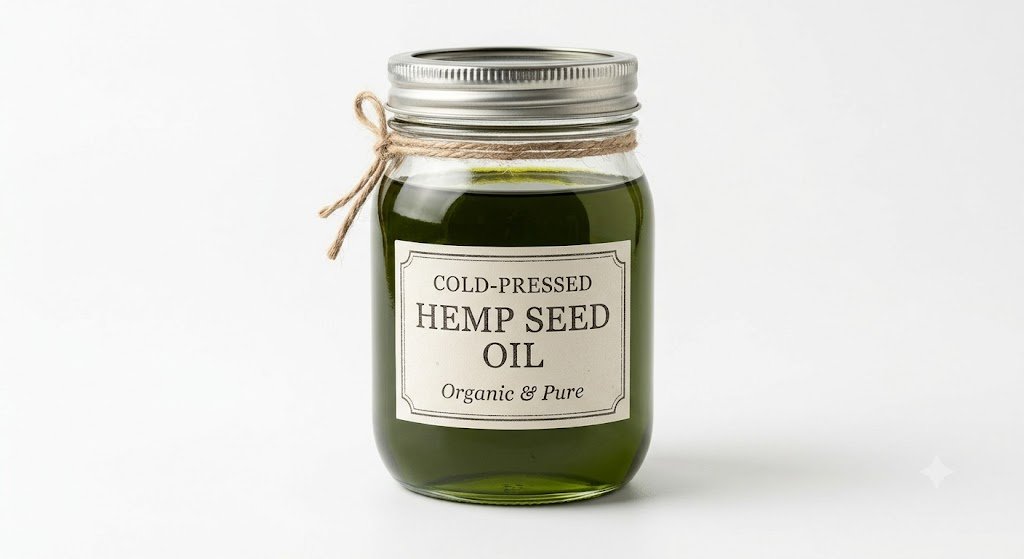

Hemp seed oil is a highly nutrient-dense natural fat extracted from the small, raw seeds of the industrial hemp plant (Cannabis sativa). Specifically, this premium liquid lipid is obtained exclusively through cold-pressing mechanical methods to safely protect its highly sensitive chemical structures from destructive thermal damage. This historic fat is widely celebrated across the globe for holding a mathematically perfect nutritional ratio of essential fatty acids. Additionally, it features a beautifully dark emerald-green color, a clear viscosity, and an intensely rich, deeply nutty, and crisp herbal flavor profile. For this reason, it has become a foundational culinary and functional fat staple in many international markets.
Originally, the parent plant species was native to the ancient, temperate river basins of Central Asia and East Asia. However, it was domesticated thousands of years ago during the very dawn of early human agricultural tracking frameworks. Later on, it spread rapidly across Europe, Africa, and the Americas through ancient maritime networks and historic textile migration paths. Today, it is produced extensively across Canada, France, China, and the United States. Consequently, it is prized as an elite raw finishing oil, a foundational baseline for vibrant cold sauces, a skin-nourishing systemic tonic, and a modern longevity dietary supplement.
Because it is packed with essential polyunsaturated fatty acids, protective fat-soluble nutrients, and a unique anti-inflammatory compound called gamma-linolenic acid (GLA), this seed-derived fat is highly valued. It offers incredible nutritional density alongside remarkable culinary versatility. Therefore, this comprehensive guide explores its history, nutritional profile, health advantages, traditional uses, cultivation frameworks, and practical ways to include it in your daily diet safely.
The Deep History of Hemp Seed Oil & Its Cultural Importance
This premium seed lipid possesses a monumental agricultural history rooted deeply in early industrial raw material survival and traditional nutritional tracking. Over time, it spread across the globe through continuous migration and trade.
The Ancient History of Cannabis Seed Natural Fats
- The Early Neolithic Staple: Early human societies in ancient China cultivated the versatile crop as early as 5000 BCE. Growth parameters prioritized these dense seeds because they provided essential, long-lasting energy and durable fiber components for early textile weaving.
- The Classic European Apothecaries: Historical medieval records highly praised the oil as a luxurious skin treatment asset and a powerful internal soothing medicine base. Consequently, monastic garden communities heavily documented using the unrefined fat to balance internal physical warmths.
- The North American Agricultural Boom: Early western pioneers mandatory grew the crop across continental soils to produce durable ship sails and high-stamina food fuels. Therefore, legendary historical leaders explicitly commanded farmers to prioritize the expansion of these robust seed fields.
- Modern Plant-Based Lipid Validation: Food scientists isolated its unique polyunsaturated fat matrix, particularly its signature three-to-one fatty acid equilibrium, in the late 20th century. As a result, it achieved massive contemporary popularity globally as a premium plant-based longevity superfood fat.
Botanical Description of the Industrial Hemp Plant
Cannabis sativa belongs to the Cannabaceae family. For instance, industrial hemp grows naturally as a tall, fast-growing herbaceous annual completely distinct from standard commercial grain fields or fruit orchard trees.
Structural Characteristics of Hemp Tree Lipids
- Growth: It grows naturally as a tall, erect, highly fibrous annual herb. Usually, it reaches 2 to 5 meters in height within a single growing season and features a stiff, hollow green stem wrapped in exceptionally durable structural fibers.
- Leaves: The plant produces large, opposite, palmately compound green leaves. In addition, these iconic leaves feature 3 to 9 narrow, lanceolate leaflets displaying sharply serrated structural margins and a fine, hairy surface texture.
- Flowers: It bears separate male and female blossoms on distinct individual plants during late summer. Typically, the male plants form loose green clusters that shed pollen into the air, while the female plants produce dense flower spikes that host the developing seeds.
- The Nutlet Seed: It forms thousands of small, oval, hard-shelled nutlet seeds measuring 3 to 5 mm in length when fully mature. Furthermore, cold-pressing these smooth, brownish-gray hulls releases the rich emerald liquid fat that holds the active nutritional matrix.
Ideal Growing Conditions for Maximum Hemp Seed Oil Production
This plant is an exceptionally fast-growing, highly adaptable annual crop. Therefore, it requires moderate seasonal templates and deep, well-drained soil layers to develop optimal oil percentages within the seeds.
- Ideal Temperature: It prefers moderate growing climates between 15–26°C for optimal stalk and seed extension. However, it is highly sensitive to waterlogged spring soils and severe freezing temperatures during the early germination window.
- Soil Type: It thrives best in deeply drained, loose, fertile silty loams or alluvial clay loams rich in organic matter. On the other hand, it absolutely cannot tolerate highly compacted, hardpan soils that block delicate taproot extensions.
- Propagation: It is regularly grown from seeds sown directly into open field rows during early spring. Specifically, its dense canopy development naturally shades out competing weed growths, completely eliminating the need for synthetic chemical sprays.
- Harvesting Season: Farmers harvest the mature crop during early autumn when the heavy seed heads turn greyish-brown and the leaves drop naturally. Specifically, they utilize specialized combine harvesters to gather the seeds before air-drying them immediately.
Nutritional Profile of Raw Hemp Seed Oil
This cold-pressed seed fat is naturally dense in essential polyunsaturated fatty acids. Furthermore, it contains high amounts of fat-soluble vitamins and active protective plant lipids. As a result, it is a favorite among active individuals seeking sustained clean stamina tracking.
Essential Nutrients in Unrefined Hemp Seed Oil (Per 100g serving)
| Nutrient | Amount | Health Benefits |
| Energy | 884 kcal | Natural source of dense, clean, slow-releasing metabolic energy |
| Total Fat | 100.0g | 100% pure lipid matrix completely free of proteins and carbohydrates |
| Linoleic Acid (Omega-6) | 56.0g | Primary polyunsaturated fat supporting structural cellular repair |
| Alpha-Linolenic Acid (Omega-3) | 19.0g | Exceptionally high plant omega-3 content supporting tissue wellness |
| Gamma-Linolenic Acid (GLA) | 4.0g | Rare, highly therapeutic omega-6 fat calming systemic stress loops |
| Oleic Acid (Omega-9) | 11.0g | Healthy monounsaturated fatty acid supporting overall lipid balance |
| Vitamin E (Tocopherol) | 90.0mg | Massive antioxidant presence protecting cell membranes from stress |
Note: Sourced directly from industrial varieties, this liquid contains zero psychoactive compounds (THC or CBD) but offers an unparalleled balance of essential fats. (Source: USDA FoodData Central)
Hemp Seed Oil Health Benefits for Your Everyday Well-being
1. Delivers the Perfect Three-to-One Fatty Acid Ratio
Packed with a mathematically optimal ratio of omega-6 to omega-3 polyunsaturated fats, it directly mirrors the internal human physiological baseline. Consequently, it assists the body in managing cellular communication models smoothly without promoting inflammatory imbalances.
2. Nourishes Dermal Layers via Rare GLA Lipids
Features an exceptional volume of active gamma-linolenic acid. Because this specialized compound works efficiently to reinforce skin tissue matrices, it assists the body in soothing eczema symptoms, easing redness, and locking in deep moisture metrics.
3. Supports Elite Cardiovascular Wellness Pathways
Its natural unrefined fat structure works efficiently with vascular health models. Specifically, regular raw intake helps regulate healthy low-density lipoprotein balances and encourages smooth, flexible arterial lining functions.
4. Calms Systemic Joints and Muscle Stress
The abundant Vitamin E and polyunsaturated elements work in perfect synergy with protective enzyme loops. For example, incorporating the oil into your daily meal layouts helps shift internal prostaglandin signals away from chronic tissue cascades.
5. Enhances Intestinal Microbiome Comfort Pathways
Contains a gentle, clean fat delivery system that nourishes the gastrointestinal tract. For instance, its natural anti-inflammatory components help maintain the delicate integrity of tight intestinal linings while promoting smooth digestive transit tracking.
Traditional & Modern Culinary Uses for Hemp Seed Oil
1. Cold Finishing Drizzles with Hemp Seed Oil
First, prepare a warm bowl of roasted root vegetables, brown rice, or fresh vegetable minestrone soup. Then, drizzle a single tablespoon of raw hemp seed oil directly over the food right before serving to fully protect the delicate polyunsaturated bonds.
2. Classic Emerald Wellness Salad Dressings
Combining three parts cold-pressed hemp seed oil with one part apple cider vinegar, a teaspoon of raw honey, and minced fresh herbs yields a beautiful mix. Consequently, whisking them creates a delicious dressing that enhances vegetable absorption.
3. High-Protein Breakfast Smoothie Enhancements
Pouring a single tablespoon of the green lipid directly into cold protein shakes or green blender recipes adds a rich, velvety body. As a result, you achieve a highly satisfying meal perfect for morning energy tracking.
4. Nutritious Creamy Pesto Sauce Bases
Blending fresh basil leaves, pine nuts, garlic, and sea salt with hemp seed oil instead of olive oil creates a bold, rustic green sauce that pairs beautifully with gluten-free grains.
How to Include Hemp Seed Oil in Your Daily Diet
- The Strict Fridge Storage Rule: Always store hemp seed oil securely in a cool, dark refrigerator once opened, and never apply direct cooking heat to it; specifically, exposure to ambient heat or frying pan thermal loops instantly destroys the fragile fatty acid bonds, turning the oil bitter.
- The Raw Finishing Habit: Prioritize utilizing this premium oil raw rather than for active frying tasks; specifically, consuming it raw ensures you capture 100 percent of the active anti-inflammatory gamma-linolenic acid.
- Morning Porridge Stir-Ins – Drizzle a teaspoon of emerald oil directly into your warm morning oatmeal or hemp heart bowls.
- Nutritious Hummus Boosters – Stir a tablespoon into your homemade chickpea dips or avocado guacamoles before serving to enhance texture.
- Satiety Shake Twists – Whisk a splash into your post-workout recovery smoothies to balance out your daily healthy fat macros.
Side Effects & Precautions
While safe and highly beneficial for the general population, certain precautions apply:
- Consuming excessive, unmeasured quantities may contribute to a rapid surplus of daily calories due to its intense energy density.
- Frying Pan Warning: This oil has a very low tolerance for heat and a smoke point of only 165°C; therefore, it must absolutely never be used for high-heat frying, baking, or deep searing to prevent dangerous oxidation.
- The Psychoactive Clarification: Industrial hemp seeds are derived from plants stripped of THC; therefore, consuming the cold-pressed food fat has absolutely zero psychoactive effects and will never trigger positive results on diagnostic wellness tests.
The Final Quality Verdict on Unrefined Hemp Seed Oil
Ultimately, individuals seeking to maximize their daily health advantages must prioritize fresh, cold-pressed, dark-bottled refrigerated variants over cheap ambient shelf vegetable oil blends. (Source: Wikipedia: Hemp Oil)
Conclusion
In summary, Cannabis sativa extract is a nutrient-rich seed fat celebrated for its exceptional omega ratio, skin-nourishing GLA lipids, and unparalleled raw finishing utility. From simple salad dressing enhancements to cold finishing drizzles and energetic breakfast smoothie additions, hemp seed oil continues to reign as a vital foundational superfood fat across the earth. Whether used as a simple structural skin nutrient or a daily longevity tonic, it delivers fantastic life-giving value to a balanced lifestyle.
Therefore, start introducing raw hemp seed oil varieties into your weekly diet planning alongside target superfoods. Ultimately, you will enjoy its distinctively rich flavor and protective properties as part of a natural, healthy lifestyle.